Featured

Montana Adventures

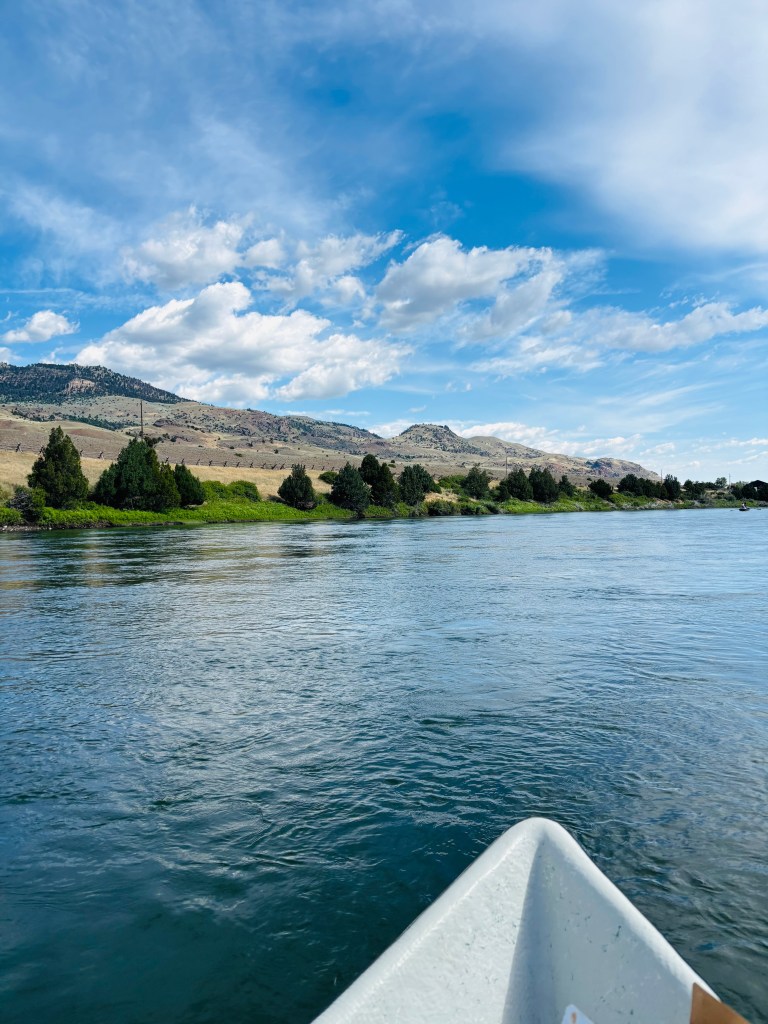
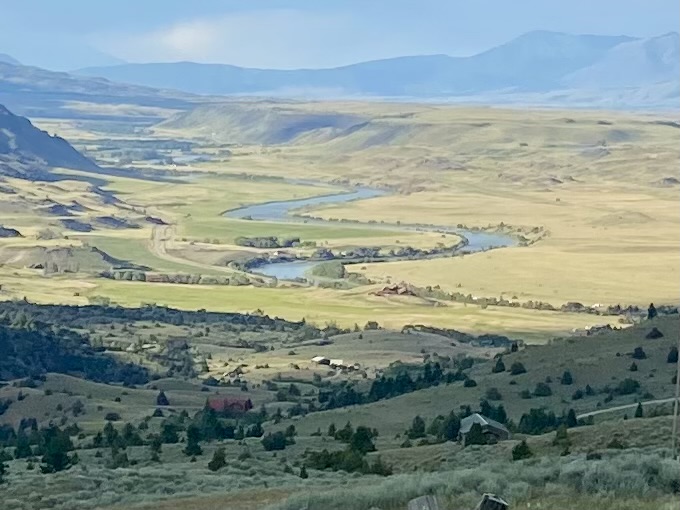
Last week all of the East Coast members of our family joined me and Jim in Emigrant, Montana for a week in big sky country. While James is living his Montana dream as an outfitter and owner of Hatch Finders Fly Shop, and as a guide for Hubbard’s Yellowstone Lodge, the rest of us dream crashers loved every moment of the sweeping mountain vistas, the beautiful Yellowstone River, the prehistoric prairie landscape, and the outdoor lifestyle.

From fly fishing as we floated the Yellowstone River, to a day in the park in Wyoming watching Old Faithful erupt, being awed by the Grand Prismatic Springs, and seeing a bear club up close and personal (with no mama bear in sight), to exploring Livingston, MT, and dining and fishing at the Sage Lodge, the highlight of our trip by far was celebrating the 4th of July with James’ Montana family – the Hubbards. 

Nestled between two stunning snow-capped mountain ranges at an elevation of nearly 5000 feet, accessible by a very long and winding uphill dirt road, Hubbard’s Yellowstone Lodge, is a two time Orvis Lodge of the Year award-winning fly fishing and horseback riding lodge on the north border of Yellowstone National Park. It is simply magnificent. The Hubbard family has been ranching the property, which includes 8000 acres spread over 25 miles in the Tom Miner Basin of Paradise Valley, for nearly forty years. They love to share the ranch, their private Merrill Lake, where Jenna had the privilege to ice fish with James this past winter, and the incredible views of the Yellowstone River. Lucky for us, they also love James. 

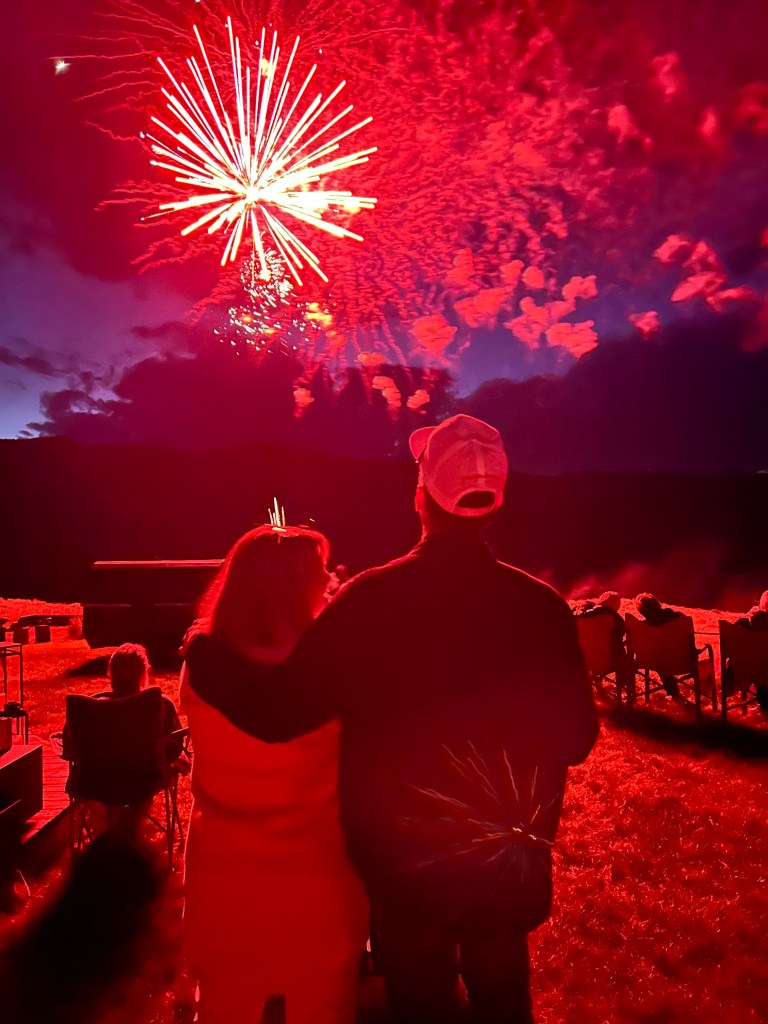
We were all warmly welcomed at their BBQ birthday party for America complete with the best firework display I have ever witnessed. The location on the edge of a mountain and the patriotic playlist may have had something to do with the majesty of the show. I don’t think any of us will forget the untouched ranch views for as far as the eye can see, the conversations, the food, the one man band skillfully playing country music, and the grand fireworks. The night will be a part of our Montana adventures forever.

From our rented chalet, with floor to ceiling windows on two sides, we had amazing views of the mountains on both sides and especially Emigrant Peak, which rises to an altitude of 10,960 feet overlooking the Valley. To see snow caps in July made us smile, however, none of us brought clothes warm enough for 40 degree mountain nights. We had to buy Hatch Finders Fly Shop hoodies for warmth! 

James and Whitney had us for dinner in their beautiful home at the base of the Absaroka mountains, a subrange of the Rocky Mountains, on our last night in Montana. The range stretches 150 miles across the Montana–Wyoming border, and forms the eastern boundary of Yellowstone National Park along Paradise Valley. The view from their front yard, where Kelsy and Steven did the actual grilling part of dinner, is also of Emigrant Peak. It is simply breathtaking. We love you Montana, we will definitely return, and not only because a very special piece of our family lives there! 

And, there is no photographic evidence that we saw a bear cub. That is another Montana adventure forever etched in our mind’s eye.
Featured

The Balm We Need

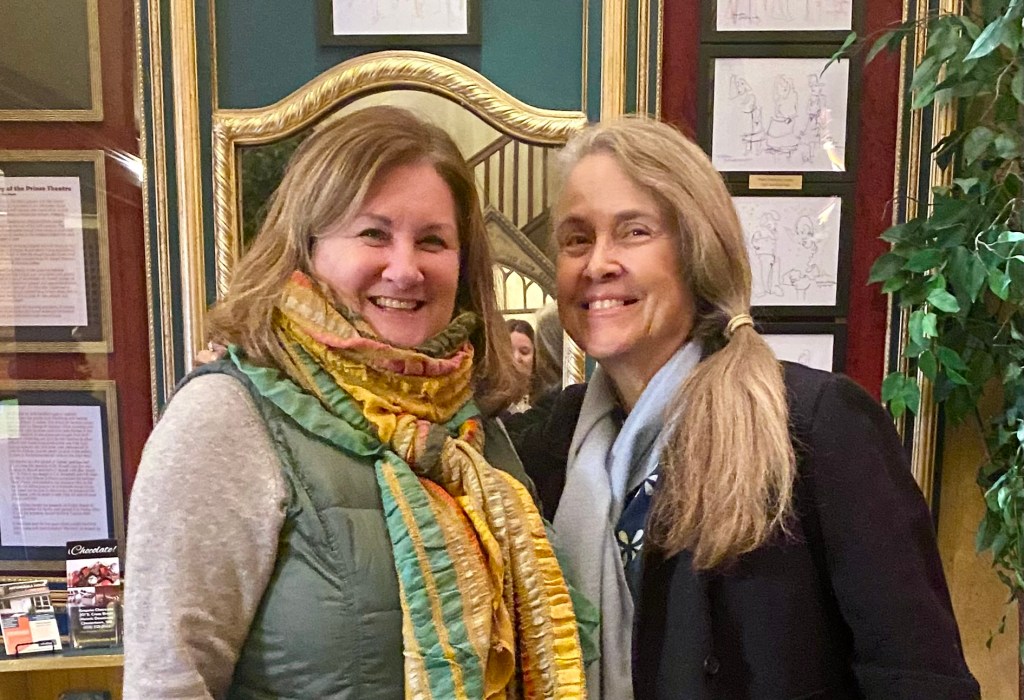
My dear friend, and inspirational poet, Naomi Shihab Nye spent the weekend in Chestertown as the Main Event of the 15th Annual Kent County Poetry Festival. Naomi describes herself as a “wandering poet” and I was so thrilled to have her wander back to the Eastern Shore with gratitude to the Kent Cultural Alliance. She has been to my school twice, and her time here this week was magical. Seeing our town and community through the lens of a masterful poet renewed my deep love for our uniquely rich and vibrant community on the Chester River.

Naomi’s father was a Palestinian refugee and her mother an American of German and Swiss descent, and she spent her adolescence in both Jerusalem and San Antonio, Texas, where she still resides. Her experience of both “cultural difference and different cultures” has influenced her work. Known for writing about ordinary events, people, and objects, Naomi has said for her, “the primary source of poetry has always been local life, random characters met on the streets, our own ancestry sifting down to us through small essential daily tasks.” 

On Saturday evening Naomi held a Poetry Reading and Interview with Maureen Corrigan, Georgetown literary professor and NPR personality. The Garfield Center for the Arts was full of life and laughter as Naomi regaled us with stories of how poems blossomed from her varied life experiences. She could have read her poems all evening as we sat captivated by her every word. It was exactly the balm that we all needed in this complicated world in which we live – a balm only poems can provide. 

Sunday morning I was her Uber driver to the airport. It was wonderful to have an hour of time alone with her in my car. We did not stop talking for a single second! And, although she did not read her poem Gate A4 on Saturday, I could not help thinking about it as I dropped her off. Gate A4 reminds us of our shared humanity. The poem describes an airport scene where Naomi helped a Palestinian woman, who spoke no English, through her knowledge of Arabic and her compassion. “This is the world I want to live in,” she wrote, “the shared world.” 

My word for this academic year at Kent School is Kindness, and it is also one of my personal favorite poems by Naomi.

Only kindness raises its head from the crowd of the world to say 

it is I you have been looking for, 

and then goes with you everywhere

like a shadow or a friend. 

Safe travels today, my friend. Hope to be with you again very soon in our shared world.

Featured

Hygge

I recently learned a new word, well, new to me. Hygge (pronounced “hooga”) – a Danish and Norwegian word dating to the 1800s, describes a cozy, contented mood evoked by comfort and conviviality. I am now obsessed with it. In the dreary, dark days of midwinter, hygge means creating a warm atmosphere and enjoying the good things in life. The warm glow of the fireplace is hygge. Curling up with a good book – that’s hygge, too. Anything that brings you comfort, contentment and joy is hygge.

The word is said to have no direct translation in English, though “cozy” comes close. It derives from a sixteenth-century Norwegian term, hugga, meaning “to comfort” or “to console,” which is related to the English word “hug.” Associated with relaxation, indulgence, and gratitude, hygge has long been considered a part of the Danish national character. (New Yorker)

Never underestimate the power of  taking time away from the daily rush to be together with people you care about – or even by yourself – to relax and enjoy life’s quieter pleasures. Meik Wiking, author of The Little Book of Hygge: The Danish Way to Live Well, shares the ten principles of the Hygge Manifesto: Atmosphere, Presence, Pleasure, Equality, Gratitude, Harmony, Comfort, Truce, Togetherness, and Shelter. 

Hygge design focuses on creating welcoming and serene spaces where you can spend time with loved ones. With a balance of minimalism, soft textures, and nature, hygge style makes your home feel cozy and lived-in. Warmth is another key part of hygge design. I am all in. 

Creating cozy places with blankets and pillows is my superpower….just ask Jim and River. Settling in with a good book, a Lodestone candle, a soft throw blanket from The Village House, Trader Joe’s Winter Wake Up Tea with E and D Honey, and River fast asleep beside me, is my favorite weekend ritual. Hygge.

Danes are considered the happiest people on the planet. Now I know why.

Featured

About Nancy Mugele

Nancy Mugele is passionate about the written word. She is an aspiring columnist, writer and poet. Nancy believes that being grateful and kind can help change the world.

Nancy is the Head of Kent School, an independent day school serving girls and boys in PK – Grade 8 on the bank of the Chester River in historic Chestertown, MD. She is the President of the Board of the Association of Independent Maryland and DC Schools, a member of the Board of The 1911 Group (formerly Head Mistresses of the East), a member of the Board of Horizons of Kent and Queen Anne’s, a director of the Mid Shore Community Foundation, and a member of the Education Committee of Sultana Education Foundation.

Montana Magic: Family, Fly Fishing, and Fun

Tucked beneath the vast expanse of the Big Sky and nestled between the Absaroka and Gallatin mountain ranges lies a slice of paradise, literally – Paradise Valley in Livingston, Montana. Just a stone’s throw from Yellowstone National Park, this historic town is a gateway to one of the most underrated ecosystems in the American West—the majestic shortgrass prairie.

Here, rolling golden plains meet the dramatic rise of the Rockies. The air is crisp, the sun stretches long across the land, and the rhythm of life slows down just enough to appreciate the little things—like the whisper of wind through buffalo grass or the first tug on your fly line in the Yellowstone River.

Our home for the week was The Chalet, a cozy retreat with panoramic views of Emigrant Peak – the snow-capped sentinel that watches over Paradise Valley. Mornings began with coffee on the deck, where elk sometimes wandered through the fields and bald eagles circled overhead. Evenings ended under star-packed skies, and perhaps a UFO sighting.

Just down the road sits the iconic Old Saloon in Emigrant, a watering hole that’s been around since 1902. It’s the kind of place where you can grab a cold drink, hear live music on a Friday night – which we did thanks to Dylan Gossett, and swap fishing stories with locals who have been casting flies in these waters longer than most of us have been alive. The charm is rough-cut and authentic—just like Montana itself.

For our fishing excursions, we teamed up with Hatchfinders Fly Shop, one of Livingston’s best-kept secrets, if I do say so myself. Proud mom to co-owner and outfitter James, these guys know the Yellowstone River like the back of their hands. My favorite guide and his buddies, seasoned and patient, had us drifting through clear glacial water under bluebird skies, casting dry flies into riffles that danced with trout. Browns, rainbows, and the occasional cutthroat—each catch a thrill. I caught 4 fish one morning because James told me when to cast and where to cast, and I can tell you it was amazing!

The river, born high in the Absarokas and flowing untamed through Paradise Valley, feels ancient and alive. Whether you’re a seasoned angler or a beginner like me, the Yellowstone welcomes you with equal parts challenge and serenity.

What made this trip unforgettable wasn’t just the fishing—it was the freedom. Days were spent without calendar appointments – fishing, searching for agates and petrified wood, and hiking. Evenings brought us back together: grilling under the stars, laughing around the table, working a puzzle, and telling tales of the day’s “big one.”

Montana doesn’t ask you to slow down – it makes you want to. There’s a rawness to the land that’s both grounding and exhilarating. And when you’re surrounded by family, casting flies in one of the last great wild places in America, you realize just how rare and wonderful that is.

If you’re looking for a trip that reconnects you with nature, your family, and maybe even yourself, Livingston’s shortgrass prairie, Paradise Valley, and the Yellowstone River are waiting. Just contact James, bring your fly rod, an open heart, and maybe a few extra stories for the Old Saloon.

Knit One

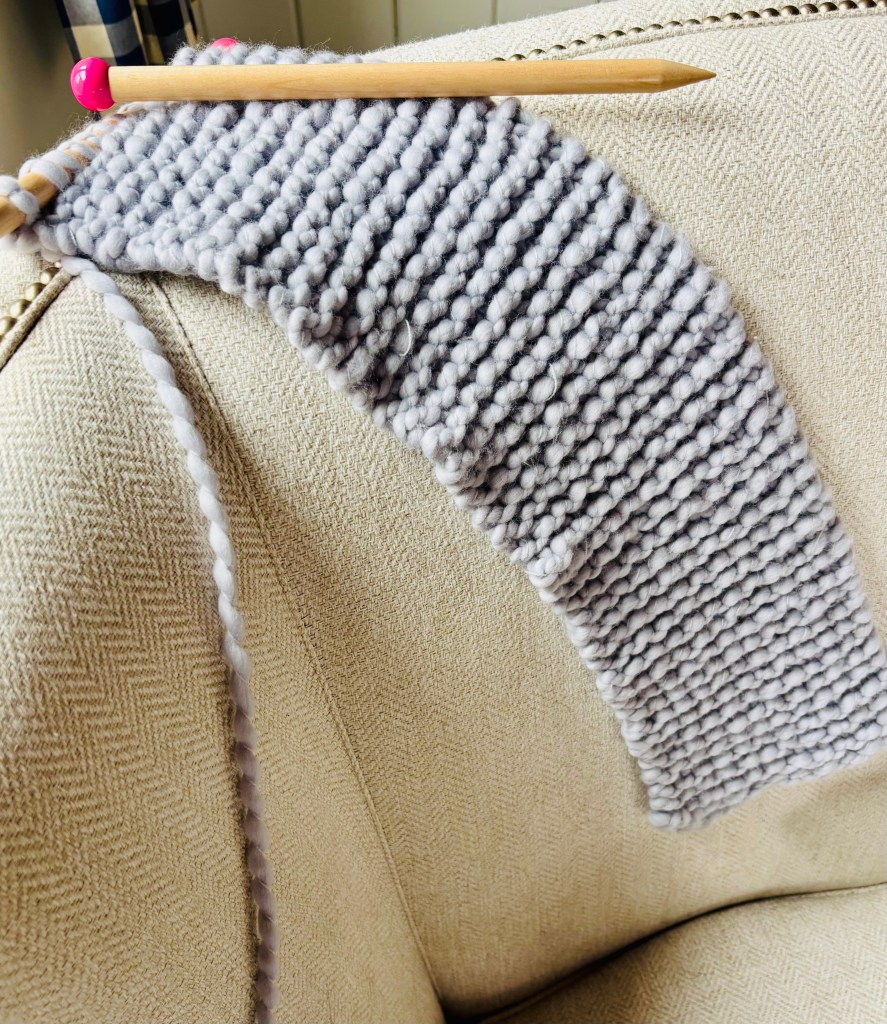
Many of you know that I have a passion for reading and writing, but this past month I have been learning how to knit. Seriously. I am halfway finished with my very first scarf, and although the beginner kit said it would take 2-4 hours to complete, I can tell you that was false advertising. Luckily, according to Punxsutawney Phil last Sunday, I now have five more weeks of winter left in which to complete it, and actually wear it, before the weather warms up! I will be working on it tonight while Jim watches the Super Bowl.

I have always wanted to learn how to knit. My grandmother was a much-sought-after seamstress, fashioning beautiful wedding dresses and bridal party ensembles in Boston in her day. That is another story. She also had a passion for crocheting, needlepoint, and crewel embroidery. I am so fortunate to have several pieces of her work in my home. They make me smile and remember her every time I see them. Jim’s mother also crocheted afghans for all of us many years ago, which we still treasure to this day.

Knitting has a very long and fascinating history that originated in the Middle East and eastern Mediterranean around the 11th or 12th century. The earliest knitted artifacts are Egyptian socks. Knitting then spread to Europe, and gradually became an important aspect of daily life, practiced by people of all genders and cultural backgrounds, and cherished as a means of providing warmth and comfort through hand-crafted clothing and blankets. Knitting was passed down from generation to generation and evolved to reflect the unique cultural influences of various regions. (A Brief History of Knitting)

Although I am a mere beginner, the benefits of knitting, once one is past the very early learning stages, are many. Knitting and crocheting can lower heart rate and blood pressure and reduce harmful blood levels of the stress hormone cortisol.

Knitting supports your brain. Research supports that knitting improves memory, attention, and problem-solving skills. A study in Frontiers in Psychology found that regular knitting enhances brain functions like task-switching and cognitive flexibility, while other research suggests it can help reduce the risk of cognitive decline, including Alzheimer’s and dementia.

Knitting is obviously a great creative outlet, can provide a sense of accomplishment, can be used as a mindfulness tool, and can boost one’s self-esteem, as well as being a fun hobby. Suddenly, I am obsessed and seeking new projects.

Reading and writing are going to need to take a back seat for a little while. I need to finish my scarf first!

Love and Light

Love and Light are two powerful symbols of this season of Christmas, Hanukkah, and Kwanzaa. And, to make the most of this holiday season I am filling my home with light. Jim and I are very fortunate to have a large hearth fireplace which we use faithfully each night of winter. It is very festive when the sun goes down in our cozy cottage, the fire roars, the Christmas lights click on, and the candles flicker. Like old and dear friends, I am grateful for their comfort. I may have a candle “problem,” and it takes a long time to extinguish them every night, but that is another story. 

The best season of the year began for our family with the wedding of my oldest and dearest niece, goddaughter, and the lighter of the Thanksgiving dinner candles. Amanda’s destination wedding weekend was filled with love. Jenna was in the wedding, and Kelsy, Steven, and James also made the trip. Extended families on many sides celebrated the ties that connect us all. A flame thrower brought the light to the festivities and we started the holiday season in perfect fashion. My new nephew-in-law even gained a second Aunt Nancy!

The poetry world dimmed a little this month as Nikki Giovanni’s bright light was lost. Giovanni wrote more than two dozen books, including volumes of poetry, children’s books, and three collections of essays. She was a professor of English at Virginia Tech for 35 years. She wrote: We love because it’s the only true adventure. I have been reflecting on these poignant words.

Love is an adventure. Whether it takes you to Jamaica for a destination wedding, Florida for Thanksgiving at your daughter’s home, South Carolina to celebrate your mother’s Pearl Harbor Day birthday, or keeps you at home on the Chester River to celebrate Christmas a bit early with two of the three. Love is what matters most on this planet and is what makes the adventure worth the trip! Forget the other stuff. Love with your whole heart.

Wishing you Love and Light this holiday season and in the coming New Year.

Glimmers

Have you heard of glimmers? I just learned they are small moments that make us feel a sense of joy, happiness, calm, connection, peace or gratitude. They are the little things we notice that instantly elevate our mood, even when we are feeling down. Research suggests that the ability to notice and appreciate glimmers can enhance your mental health by reducing stress and anxiety, and improving your mood.

Yesterday, I noticed some black eyed susan’s blooming along our living shoreline. I paused to take notice of their vibrant color and slender stems swaying in the breeze. I made Jim snap a photo with his smartphone because I had left my phone inside and his takes better pictures anyway. A glimmer moment. 

Glimmer means to shine with a weak light or a light that is not continuous. It is a sliver of light. Similarly, a glimmer of hope is a small sign or a small chance for something in the future. Even though I had never heard the term glimmers until a few days ago, working in a school means I get to experience glimmers each and every day. Little moments of light, hope and love.

A smiling 6th grader gave me a bracelet named for my word of this academic year. A smiling parent gave me an old, tiny book with my word as its title. A parent brought baguettes for the faculty on a rainy Friday morning. These moments, and many more of them, fill my days as Head of Kent School. 

At the grocery store this morning, I noticed a display of pomegranates – the first of the season. A glimmer moment for me for sure as they signal the holiday season and gratitude. 

Sunrise glimmers, sunset glimmers, and all the moments in between. Hoping you have many glimmers this week.

Collective Joy

I have said before that JOY is my favorite word in the English language. I like it for its impact in just a few letters. I love to play it in Words with Friends or Scrabble because I feel as if I am sharing a little bit of joy with my opponent. And, I challenge you to say it without smiling just a little, even if only on the inside.

We could all use a little collective joy these days. And, my family found it this weekend at Oriole Park at Camden Yards dancing in the dark with the Boss, the one and only Bruce Springsteen and the E Street Band. I kept thinking all night how palpable the feeling of collective joy was in the stadium. It was thrilling, loud, happy, and highly energetic.

The phrase collective joy  was coined over a decade ago by author and columnist Barbara Ehrenreich who wrote Dancing in the Streets: A History of Collective Joy. In this scholarly history of dance, the author explores the human impulse to dance, and its seemingly constant suppression throughout history. 

Ehrenreich writes about “the desire for collective joy, historically expressed in revels of feasting, costuming, and dancing.” Communal celebrations and mass festivities date to Medieval times and are central to Western tradition. In recent centuries, however, Ehrenreich asserts that the festive tradition has been repressed, but, she states, “the celebratory impulse is too deeply ingrained in human nature ever to be completely extinguished.” I credit Ehrenreich with naming a condition that contains so much spirit and ability to inspire. In her definition, collective joy involves “music, synchronized movement, costumes, and a feeling of loss of self.” 

Brené Brown also wrote about collective joy in Braving the Wilderness: The Quest for True Belonging and the Courage to Stand Alone. Brown encourages us to share collective joy. “People with a sense of true belonging spend time sharing emotional experiences with large and diverse groups—whether those groups are found at sporting events, live music, church services, or vigils,” writes Brown. “The more we’re willing to seek out moments of collective joy…the more difficult it becomes to deny our human connection.”

On Friday night, Kelsy, Steven and I helped celebrate Jim and Jenna’s birthdays dancing for three hours to some of our most favorite music. Springsteen never disappoints. He is a gift to many people and inspires us to be better humans. Concert-goers connect and experience joy with each other as they sing together, dance together, jump up and down together, and scream at the top of their lungs together. 

The E Street Band are the people who know Bruce Springsteen best, and in his own words from an article in Rolling Stone, “They are my greatest friendships, my deepest friendships — irreplaceable things.”  His touching tributes last night to original bandmates who have passed on reminded me that loved ones are irreplaceable and that we should spend as much time with them sharing collective joy as is humanly possible. It will keep us young at heart and connected with lifelong memories. 

And although my throat is sore and my knee hurts a bit today, the three hours of singing and dancing were worth it! They don’t call him The Boss for nothing!

Peace Messenger

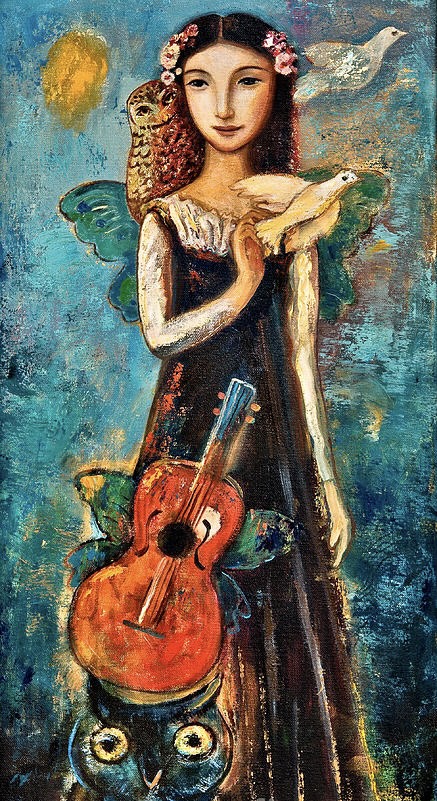
Peace Messenger by Shijun Munns

Last weekend, at the Paris Olympics, Snoop Dog, the country’s unofficial mascot, said: Whoever holds the torch is a peace messenger. What a beautiful sentiment, and one I wish every human would internalize. We should all strive to be peace messengers, whether or not we are fortunate enough to hold the Olympic torch. I have been a peace messenger this past week, myself.

Twice in the past six months Jim and I thought we were going to be grandparents for the first time. Both times began with the joyful and deeply moving knowledge of time marching onward to welcome a new generation. Alas, as is the case in one in four known pregnancies in the first trimester, Kelsy suffered a miscarriage, twice. Most women who miscarry do go on to have a healthy pregnancy later but the number of miscarriages globally is astounding. Most miscarriages happen before 10 weeks and most of these are between 7 and 9 weeks gestation. 

We need to talk about the grief that this loss brings to couples. The shame women feel and the father’s feelings after baby loss, are rarely acknowledged. It is perfectly normal for both parents to be sad, their hopes and dreams have been shattered by a process we have always told our children was simple. 

My peace messenger role consisted of grocery shopping, preparing Kelsy and Steven’s favorite meals, helping to clean and organize their home, and providing some retail therapy. Starting a family is harder than it seems and is anxiety inducing.

In health and wellness classes in high school, our children did not learn about the statistics surrounding miscarriage or stillbirth. They did not learn about genetic testing, chromosomal disorders, artificial insemination, freezing embryos, or adoption. The rhetoric was all about how to use birth control to prevent unwanted pregnancies. Maybe it is time to rethink some of our curriculum in high schools and colleges to include the fertility challenges some couples have when starting a family, especially as couples are waiting longer to try. 

When you are open and talk about miscarriage, you learn just how many couples have been through this. I had one before Jenna was born, and after James was born. It is a part of life, a blessing in disguise perhaps, yet, it is also devastating and heartbreaking. 

We need a league of peace messengers to bring love and wellness to couples experiencing the loss of their angel baby. Wishing you peace, Kelsy and Steven.

Life Lessons Taught by an Agate

Crystalized Calcite in the Sun by James Mugele, note the rainbow on the right

My son, the writer and successful Montana fly fishing guide, is also an amateur petrologist, one who studies the character and origin of rocks. His lifelong passion for rocks, and currently river agate and agatized woods, is unparalleled, and has earned him the nickname – Agate Magnet. Jim and I received gorgeous tumbled crystalized calcite, agate, and agatized wood carefully crafted by James for Christmas. Mine is on an intricately knotted fish line so two rocks can dangle in my kitchen window. If I am lucky, on a sunny morning, I can glimpse an elusive rainbow in the calcite.

Agate is the most popular tumbling rock because of its color, interesting patterns (bands, eyes, moss, lace), and translucence, enhanced by an exceptionally bright polish. When James recently shared with me that his commercial rock tumbler imitates the action of a rock tumbling in a river for millions of years, I had to learn more. In The River Runs North – the Story of Montana Moss Agate by Tom Harmon, the author describes how agates are formed (excepted):

At the time of the dinosaur extinction about 65 million years ago, two-thirds of eastern Montana was covered by shallow inland seas. This catastrophic event occurred at the same time as the Rocky Mountains were formed and massive lava flows resulted. These volcanic flows lasted several million years and was the beginning of the formation of agate and agatized woods.

The book details the petrology and mineralogy (the mineral components that create rocks) of the agate formation which is all fascinating to me, and I cannot help thinking about the lessons we can learn from agate.

Perseverance, Grit, and the long approach

Perseverance is the ability to keep going, even when faced with challenges, setbacks, failures or unexpected obstacles. Grit is perseverance and passion for long-term goals, maintaining both effort and interest over years and years. Just like the agate, humans need to remember that life is a marathon, not a sprint, something a Kent School trustee told me in my first year of Headship. Tumbling in a river for 20 million years is unequaled perseverance and a good lesson in taking the long term approach to goals.

Age brings a beauty all its own

A 20 million year old agate, agatized wood, or crystal is truly beautiful to behold. Softened edges, glistening shine, clarity. After time in a rock tumbler, these characteristics are heightened. Humans need to respect the aging process much more than we do, and recognize there is beauty in wisdom and time well lived. Older age means having faced many of life’s challenges, and sharing the experiences can be beautiful and beneficial.

New is not necessarily better

The river agates are older than we can even imagine, formed through long periods of time. Their presence in riverbeds is grounding and comforting. Why do we surround ourselves with new material objects? New and disposable, man-made items? When something breaks, we replace it. Humans can learn from the longevity of the agates and their natural process of becoming. 

Nothing heals like tumbling in a river

In poetry, a river is sometimes portrayed as a symbol of perpetual change and of the constancy of time and life itself. Its healing powers are written about by Native Americans and naturists. Water soothes the soul and humans need to reflect at the water’s edge to sustain themselves. 

An agate tumbling lifelong in a riverbed is the luckiest of all.